
Risk Assessment in DeFi: Why a Smarter Web3 Wallet Is Not a Substitute for Judgment
What if the most dangerous transaction in DeFi is not the one that fails, but the one that succeeds exactly as written?
That question exposes a common misunderstanding about wallet security. Many users imagine risk as a technical defect: a stolen private key, a compromised website, or a malicious contract. Those threats matter, but a large share of real-world loss begins earlier, when a user approves an action without understanding what it permits. A transaction can be valid, confirmed, and irreversible while still being economically disastrous.
For US-based DeFi users moving across Ethereum and other EVM-compatible networks, a modern wallet can improve the quality of the decision made before signing. Transaction simulation, address warnings, token-approval analysis, and network context are valuable because they translate opaque blockchain instructions into more understandable consequences. Yet these tools have boundaries. The useful mental model is not “the wallet makes DeFi safe.” It is “the wallet helps reduce uncertainty, while the user remains responsible for interpreting the result.”
The first myth: a successful transaction must have been safe
On a conventional payment network, success usually means the intended recipient received the intended amount. On a smart-contract platform, success only means that the network accepted the transaction and the contract executed according to its code. The code may have performed an action the user did not anticipate.
Consider a familiar DeFi scenario. A user visits what appears to be a legitimate trading interface, connects a wallet, and receives a prompt to approve a token. The approval itself may not transfer funds. Instead, it gives a contract permission to move a specified token amount later. If the allowance is broad, or if the contract is malicious, the future risk can be much greater than the immediate transaction suggests.
This is why risk assessment should separate three questions. First, is the destination contract or address what the user intended? Second, what state change will the transaction create? Third, what could happen afterward if the permission remains active? A wallet that answers only the first question is useful, but incomplete. A serious review must consider both the present transaction and the authority it grants for the future.
What transaction simulation actually contributes
Transaction simulation attempts to execute a proposed transaction in an estimated blockchain state before the user signs it. The result can reveal likely token transfers, changes in balances, approvals, contract interactions, or failures. In practical terms, simulation turns a prompt such as “interact with contract” into a more interpretable question: “If this executes, which assets leave my wallet, and what permissions change?”
That shift is important because smart-contract transactions are difficult to audit from raw calldata alone. Calldata is the encoded instruction sent to a contract; it is precise for machines but rarely readable for ordinary users. Simulation creates a bridge between technical execution and human decision-making.
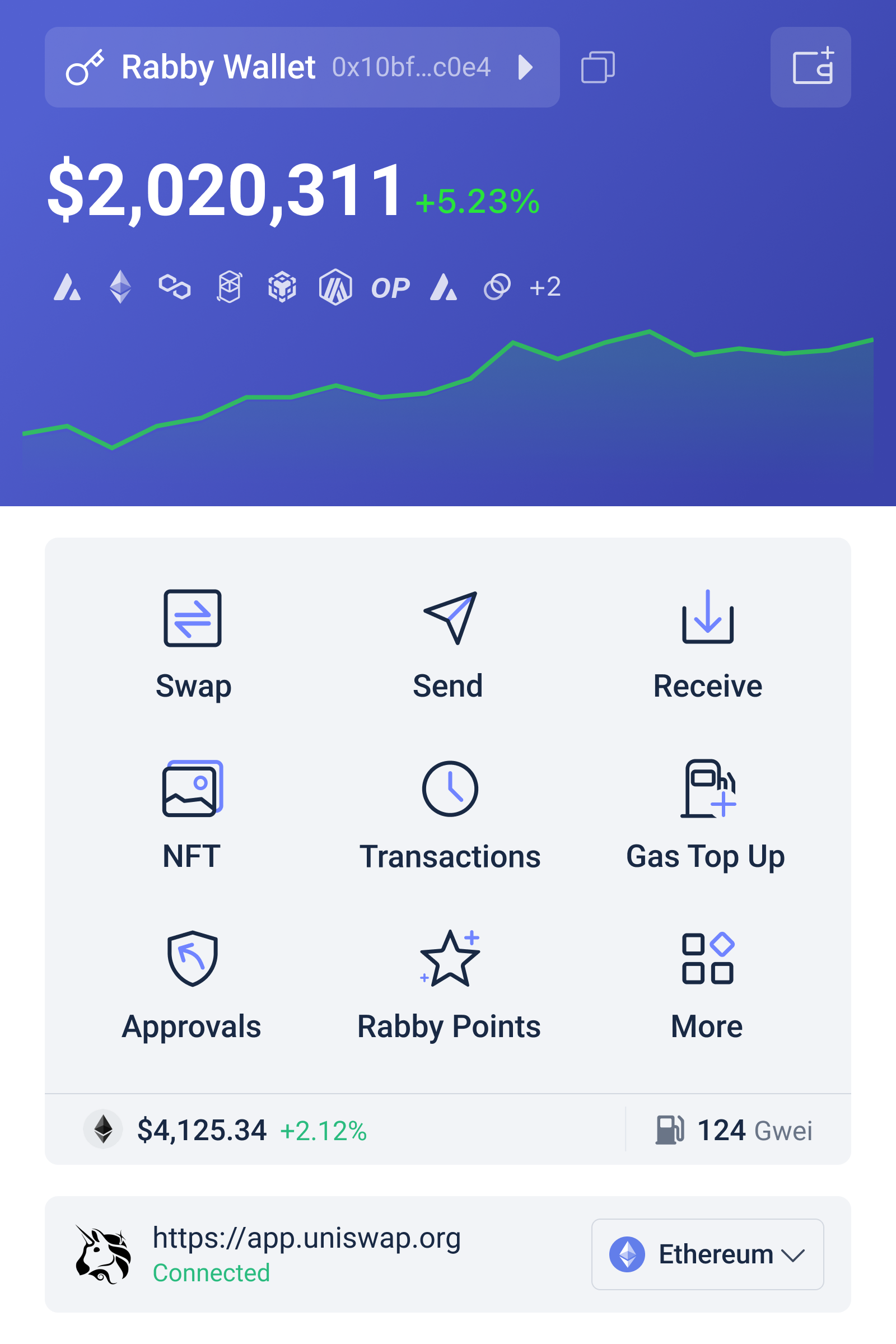
For someone evaluating an advanced rabby wallet, this is one of the most meaningful capabilities to examine. A wallet designed for Ethereum and EVM networks can place transaction consequences, network selection, contract interactions, and warnings closer to the signing moment. That reduces the chance that a user treats every prompt as an interchangeable “confirm” button.
However, simulation is not a crystal ball. It depends on the assumed state of the network, the behavior of the contract, the accuracy of the simulation environment, and the ability of the interface to represent complex outcomes clearly. A transaction may behave differently if market prices move, if a contract depends on external data, or if another transaction changes the state before execution. A simulation can also show that a call succeeds without proving that the underlying protocol is solvent, fairly governed, or economically sensible.
The deeper distinction: execution risk versus economic risk
One of the most useful distinctions in DeFi is between execution risk and economic risk. Execution risk concerns whether the transaction does what the user technically expects. Economic risk concerns whether the result is good for the user after considering price movement, liquidity, fees, leverage, collateral, and incentives.
Suppose a simulated swap shows that a user will receive the expected token. That may reduce execution uncertainty. It does not eliminate slippage, impermanent loss, oracle failure, liquidation risk, or the possibility that the received token loses value. Likewise, a warning that a contract is unverified or newly deployed is a valuable signal, but not conclusive proof of fraud. Risk indicators should update judgment, not replace it.
This boundary matters especially in the US, where users may interact with protocols across multiple jurisdictions, interfaces, and chain environments without receiving a single standardized risk label. A wallet can make the on-chain mechanics more legible, but it cannot determine whether a product fits a user’s tax position, legal obligations, liquidity needs, or tolerance for loss. Those are separate layers of due diligence.
A practical framework for reviewing a DeFi transaction
Before signing, begin with identity. Confirm the selected network, the intended application, the destination contract, and the asset involved. Network confusion is a mundane but consequential source of error: an address or token symbol can appear familiar while representing a different deployment elsewhere. Do not rely on a token’s name alone; symbols are not unique identifiers.
Next, inspect the action rather than the interface language. Is the transaction a simple transfer, a swap, a deposit, a borrow, a liquidity provision, or an approval? What assets leave immediately? What assets should return? Does the operation create a continuing permission? If the wallet displays a simulation, compare the expected result with the displayed result instead of merely looking for a green status.
Then consider reversibility. Confirmed blockchain transactions are generally difficult or impossible to reverse, but the associated risk can vary. A small, bounded transfer is not equivalent to an unlimited token approval. A single swap is not equivalent to depositing collateral into a leveraged position. The more authority or economic exposure a transaction creates, the higher the standard of review should be.
Finally, ask what the warning cannot tell you. A clean simulation does not establish that a protocol’s code is bug-free. A recognized contract does not guarantee that its governance is trustworthy. A successful transaction does not prove that the quoted price was fair. This final question is where mature risk assessment differs from simple interface checking.
Security features work best as layers, not guarantees
Wallet security is best understood as a layered control system. Hardware-backed key storage or a separate signing device can reduce exposure of private keys. Domain and address warnings can help identify suspicious destinations. Transaction simulation can clarify expected state changes. Approval management can limit persistent permissions. Basic operational habits—using a separate wallet for experimentation, checking URLs carefully, and keeping recovery material offline—address risks that software alone cannot solve.
Each layer targets a different failure mode. A simulation may reveal an unexpected transfer, but it cannot protect a seed phrase entered into a fake website. A hardware wallet may protect the key, but it cannot tell a user that an intentionally signed transaction grants a malicious allowance. A warning system may flag unusual behavior, but excessive warnings can create alert fatigue, causing users to dismiss useful signals.
That last trade-off deserves attention. Security interfaces must balance sensitivity with clarity. If every unfamiliar contract produces an alarming message, users may learn to click through warnings. If the interface is too quiet, users may develop false confidence. The most effective design is not necessarily the one with the most warnings; it is the one that highlights decision-relevant differences and explains why they matter.
Recent direction and what to watch next
This week’s project messaging presents Rabby Wallet as a wallet for Ethereum and EVM chains, emphasizing simplicity, speed, security, and broad on-chain use through its browser extension experience. The important analytical implication is not that one wallet can remove DeFi risk. It is that wallet design is moving toward a more active role in transaction interpretation across multiple networks.
If that direction continues, users may increasingly expect wallets to behave like transaction risk engines rather than passive key containers. The valuable signals to watch are practical: clearer explanations of approvals, better treatment of cross-chain context, more transparent simulation assumptions, and improved separation between technical warnings and financial advice. Progress should be judged by whether users make fewer mistaken signatures—not by how many security labels appear on screen.
The unresolved issue is verification. A wallet can report what a simulated transaction appears to do, but users still need a trustworthy basis for interpreting contracts, protocols, and counterparties. Better interfaces may reduce avoidable mistakes while leaving deeper questions—code quality, governance, liquidity, and incentives—open. That is not a failure of the wallet. It is a reminder that risk is distributed across the entire DeFi system.
FAQ: Web3 wallet risk assessment
Does transaction simulation guarantee that a DeFi transaction is safe?
No. Simulation can reveal likely execution outcomes, such as token movements, approvals, and contract effects, but it depends on assumptions about network state and contract behavior. It does not prove that a protocol is solvent, bug-free, fairly priced, or suitable for the user’s financial circumstances.
Why are token approvals a major wallet risk?
An approval can give a contract permission to move tokens from a wallet later. The immediate transaction may not transfer funds, yet the permission can create ongoing exposure. Users should review the approved asset and amount, avoid unnecessary unlimited allowances where practical, and revoke permissions they no longer need.
What is the safest way to use an advanced Web3 wallet?
Use its warnings and simulations as part of a repeatable review process: verify the network and application, understand the action, inspect expected asset changes, assess new permissions, and consider what the tool cannot evaluate. For higher-value activity, separate experimental funds from long-term holdings and use stronger key-management practices.
The central lesson is simple but easy to neglect: security is not the absence of warnings, and a wallet is not a substitute for judgment. A capable Web3 wallet can make hidden transaction mechanics more visible, helping users distinguish a routine interaction from a broad and irreversible authorization. That improved visibility is valuable. The final decision, however, still belongs to the person holding the keys.