
Transaction Simulation and Gas Optimization: A Safer Way to Use DeFi with Rabby
You are about to swap tokens before work, bridge funds to another network, or claim a DeFi position. The transaction looks ordinary: approve a token, confirm a contract call, and pay a network fee. Then a warning appears. The estimated gas seems unusually high, the output may change, or the transaction could fail after the fee has already been spent. This is the practical problem transaction simulation tries to solve. It does not predict the future perfectly, but it can reveal how a proposed transaction behaves before you authorize it.
For US-based DeFi users, that distinction matters. Gas is not merely a small service charge; on busy networks, it can alter whether a trade is economically sensible. A failed transaction may not transfer the asset, yet the network can still charge for the computation attempted. A wallet that previews contract effects therefore serves as more than a signing interface. It becomes an interpreter between complex smart-contract logic and a human decision.
What transaction simulation actually does
A blockchain transaction contains instructions, including the contract address, function call, parameters, and a gas limit. Before broadcasting it, a wallet or supporting service can execute an equivalent call in a simulated environment. This execution does not normally alter the live blockchain. Instead, it estimates what would happen if the call were processed against a particular view of the network state.
That last phrase is important. The simulation is a snapshot, not a guarantee. It may inspect token balances, allowances, pool reserves, contract conditions, and expected state changes at the time of testing. A useful interface can then translate those results into warnings such as a likely revert, an unexpectedly low token output, or a contract interaction that affects more assets than the user expected.
Simulation is especially valuable because smart-contract transactions are often composable. One click may invoke a router, a liquidity pool, an approval mechanism, and another contract in sequence. The user sees one confirmation, while the protocol executes a chain of operations. A transaction preview helps expose that hidden chain. The non-obvious insight is that simulation is not simply a security feature: it is also a form of transaction literacy. It shows users what their action means at the contract level.
Why gas optimization begins before the gas setting
Many users approach gas optimization by changing the fee number. That is only one part of the problem. On Ethereum-compatible networks, the total fee is broadly related to gas used multiplied by the effective gas price. Gas used reflects computational work; the gas price reflects demand for block space and the transaction’s urgency. Reducing the gas price may lower cost, but it can also delay inclusion or increase the chance that a time-sensitive transaction becomes stale.
Simulation improves the first half of that decision. It can estimate whether a transaction will consume a large amount of gas and whether it is likely to revert. If the call is doomed because an allowance is missing, a deadline has expired, or a slippage limit is too strict, increasing the fee does not fix the underlying problem. The most efficient transaction is often the one that is corrected before it is sent.
This leads to a practical framework: separate execution efficiency from timing efficiency. Execution efficiency asks whether the contract call uses a reasonable amount of computation and succeeds. Timing efficiency asks whether paying more for block space is justified by market conditions. A wallet can help with both, but the user still has to understand the trade-off. A cheap transaction that misses a price window may be more expensive economically than a properly priced transaction that confirms promptly.
From failed calls to actionable warnings
Earlier wallet experiences often reduced transaction review to a destination address, a fee estimate, and a generic request to sign. That model was inadequate for DeFi because the destination might be a router rather than the final asset recipient, and the visible fee says little about the contract’s effects. Modern transaction simulation developed in response to this complexity, alongside better token decoding and contract-risk analysis.
A simulated preview may answer several practical questions. Will the call revert? Which token will leave the wallet? Which token should arrive? Is an approval being granted, and for how much? Does the transaction interact with a contract or asset that the user did not intend to use? These questions are not interchangeable. A transaction can succeed technically while still producing an unfavorable outcome, such as receiving less than expected because of price impact or approving a broader allowance than necessary.
That is why users should not treat a green simulation result as a blanket endorsement. Successful execution means the call appears executable under the tested conditions. It does not prove that the token is legitimate, that the protocol is economically sound, that the quoted price will remain available, or that the contract cannot behave differently later. Simulation checks a proposed action; it does not replace due diligence on the application or asset.
Installing a browser wallet without weakening the security model
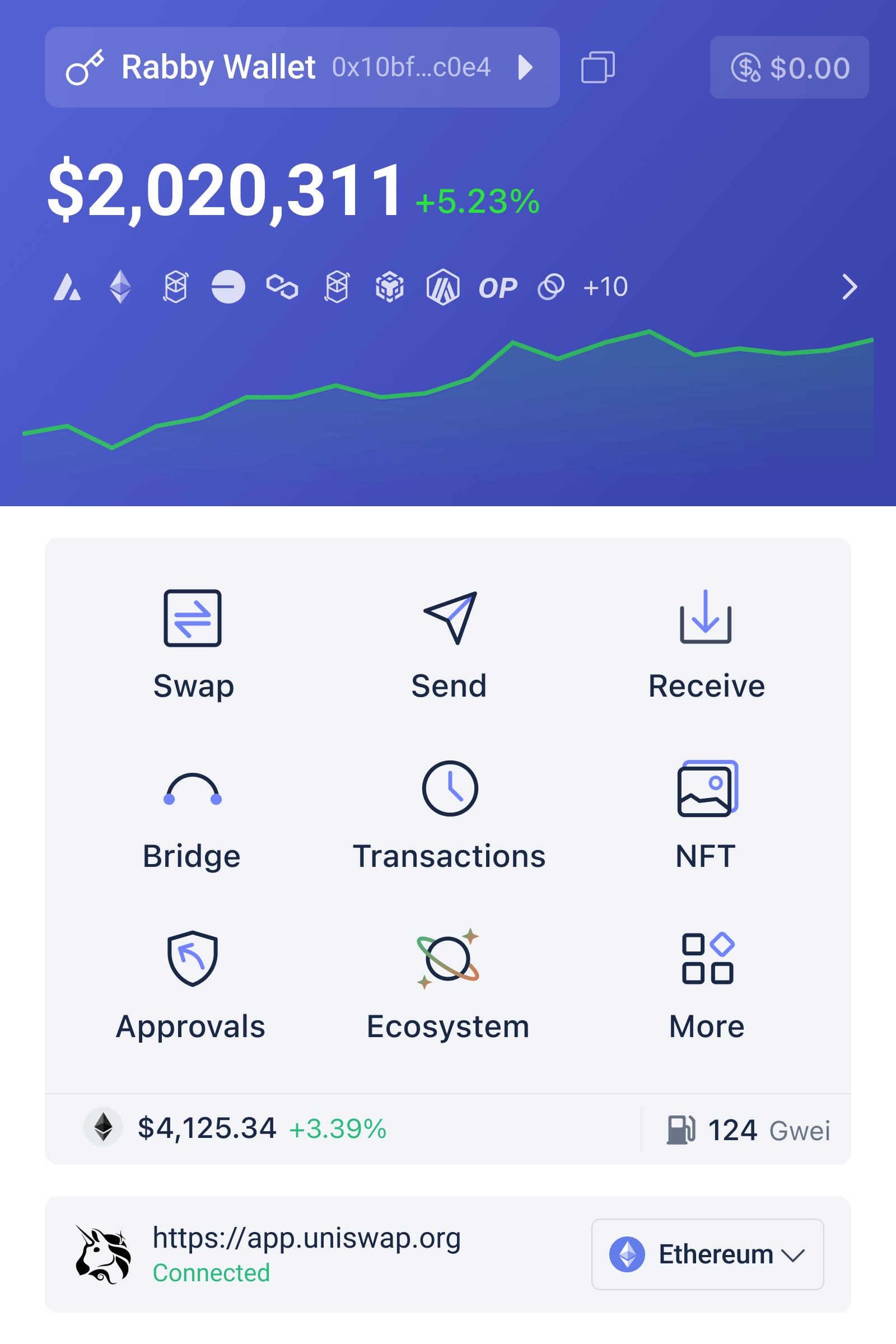
For readers preparing to use Rabby in a desktop browser, the safest starting point is to reach the project’s authentic distribution path rather than rely on a search advertisement, unsolicited message, or copied download button. The rabby extension can then be installed through the appropriate official browser workflow, followed by careful verification of the publisher, permissions, and extension identity.
Installation is only the beginning. A wallet extension can display transaction information, but it cannot protect a user who approves every prompt automatically. Create or import a wallet only through a trusted process, keep the recovery phrase offline, and never enter it into a website claiming to “synchronize” or “verify” the wallet. For meaningful balances, a hardware wallet can add a separate signing boundary, although it does not make a malicious approval or poor trade economically safe.
After installation, a sensible first test is a low-value transaction on the intended network. Confirm that the selected account, chain, token, recipient, and displayed effects match your expectation. DeFi users often move among several networks in one session, and a correct address on the wrong chain can still create confusion or loss. Network selection is therefore part of transaction security, not merely a convenience setting.
A practical review routine for every DeFi transaction
Before signing, read the simulation as a set of questions rather than as a single risk score. First, identify the action: swap, bridge, lend, borrow, stake, claim, or approve. Next, inspect the assets leaving and entering the wallet. Then check whether the contract call includes an approval and whether the allowance is limited to the intended amount when that option is available.
After that, compare the expected output with the amount you are willing to accept. Slippage is the allowed difference between the quoted and executed result. A very tight setting can cause a legitimate trade to revert when the market moves; a very loose setting can permit a materially worse execution. The correct value depends on liquidity, volatility, trade size, and the application’s design. There is no universal “safe” percentage.
Finally, review the gas estimate and the fee in the context of the transaction’s value. A high gas estimate may reflect a complex operation, while a high gas price may reflect temporary network demand. Batching or combining actions can sometimes reduce repeated overhead, but more complex calls may also consume more gas and create a larger failure surface. Optimization is therefore not always about minimizing the number displayed in the wallet. It is about improving expected outcome after fees, timing risk, and failure risk are considered together.
Where simulation breaks down
Simulation has unavoidable boundary conditions. The live state can change between simulation and inclusion. A liquidity pool may move, another trader may alter reserves, a lending position may cross a liquidation threshold, or a contract may depend on an external data feed. The transaction can also be affected by ordering within a block and by other pending transactions. A successful preview is consequently probabilistic evidence, not a cryptographic promise.
Some behavior is difficult to summarize in a clean preview. Contracts may use upgradeable architecture, unusual token standards, external calls, or conditions that become meaningful only during execution. A wallet may flag suspicious behavior, but automated warnings can produce both false positives and false negatives. Users should be especially cautious when a warning is unclear, when the site domain is unfamiliar, or when the transaction requests an approval unrelated to the action being attempted.
There is also a privacy and infrastructure trade-off. Simulation often requires sending transaction details to a node or service for analysis. That can improve usability, but it may reveal information about intended activity before a transaction is broadcast. Users who care about operational privacy may prefer trusted RPC infrastructure or a setup that minimizes unnecessary disclosure, while accepting that privacy-preserving simulation can be harder to implement and maintain.
What to watch as DeFi wallets evolve
The likely direction of wallet design is toward richer intent-based explanations: not merely “sign this calldata,” but “exchange this asset for that asset, within these limits, using this route.” If simulations become more consistent across chains and applications, users may be able to compare outcomes before committing rather than react to warnings after the fact. That would make wallets closer to risk dashboards than passive key managers.
The constraint is that better interfaces cannot eliminate protocol risk. They depend on reliable state data, accurate contract decoding, responsive simulations, and users who understand what the warnings mean. The useful question for the near term is not whether simulation will make DeFi safe. It is whether wallets can narrow the gap between what a contract executes and what a person believes they authorized.
Frequently asked questions
Does transaction simulation guarantee that a DeFi transaction will succeed?
No. It tests the proposed call against an available view of network state. Conditions can change before confirmation, and some contract behavior may depend on ordering, external data, or state changes that occur afterward. Treat the result as useful evidence, not a guarantee.
Can simulation reduce gas fees?
It can reduce avoidable costs by identifying calls likely to revert or by revealing unnecessary steps before you submit them. It does not automatically reduce network demand or make a complex contract operation cheap. Gas-price timing, contract design, and network choice still matter.
What should I check after installing a Rabby browser extension?
Verify the installation source and publisher, protect the recovery phrase offline, confirm the active network and account, and test with a small amount first. When reviewing a DeFi prompt, inspect the assets leaving and entering the wallet, approval scope, slippage limits, contract warnings, and total fee before signing.