
Why Safer DeFi Transactions Begin Before You Optimize Gas
What if the cheapest DeFi transaction is the one you decide not to send? That question sounds contrary to the usual pursuit of lower fees, faster swaps, and seamless movement across chains, but it exposes a central misconception: gas optimization, wallet security, and cross-chain execution are not separate problems. They are different views of the same transaction decision.
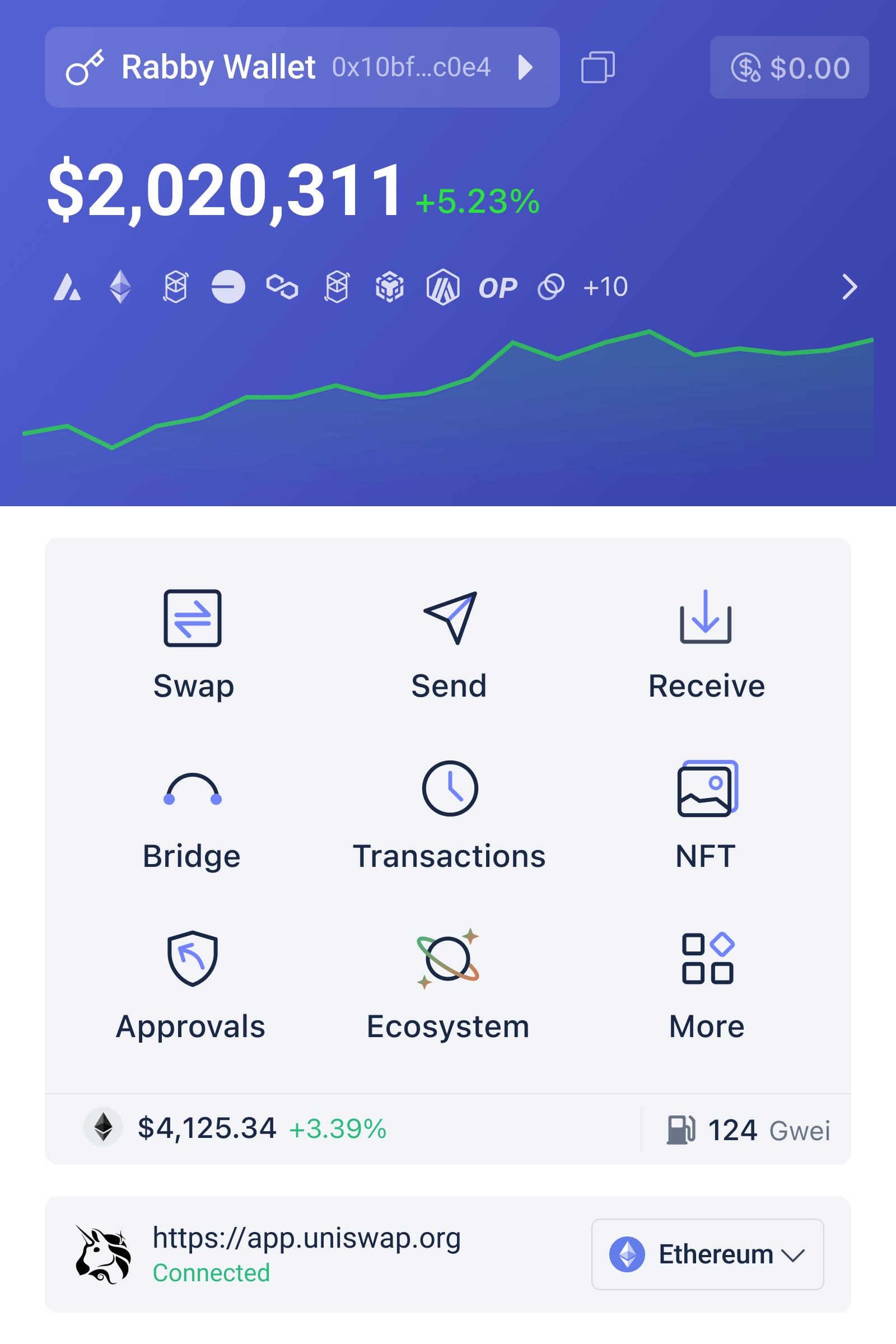
For users in the United States managing assets across Ethereum and other EVM-compatible networks, a transaction can fail in several ways. It may cost more than expected, execute at an unfavorable price, interact with an unintended contract, or complete on one chain while the user misunderstands what must happen on another. A capable wallet can improve visibility, but it cannot remove the need for judgment. Rabby’s recent positioning as a wallet for Ethereum and all EVM chains makes this broader context especially relevant: convenience is useful only when it is paired with verification.
The first myth: lower gas always means a better transaction
Gas is the computational resource paid for execution on a blockchain. The final fee generally depends on both the amount of computation a transaction requires and the network’s current demand. This distinction matters because users often treat gas as a single price that can be minimized mechanically. In practice, a cheaper transaction may involve more waiting, less favorable execution, greater price uncertainty, or a route with additional contractual dependencies.
Consider a token swap. A direct route through one liquidity pool may require fewer operations than a multi-hop route, so it can consume less gas. Yet the direct pool may have shallow liquidity, producing more price impact. A multi-hop route can cost more in execution fees while delivering a better effective exchange rate. The relevant measure is not gas alone; it is total execution cost: network fee, slippage, price impact, failed-transaction risk, and the value of the time spent waiting.
Gas optimization is therefore best understood as reducing unnecessary computation without weakening the transaction’s safety margin. Choosing a network with suitable capacity, avoiding needless approval transactions, batching compatible actions when the application supports it, and selecting a route with sensible complexity can all help. But changing a fee setting blindly is different. A fee that is too low may leave a transaction pending, while an aggressive fee may buy speed without improving the outcome.
A practical rule is to ask three questions before confirming: What must the transaction do? What is the maximum acceptable total cost? What happens if execution is delayed or fails? This simple framework is more useful than pursuing the lowest displayed gas estimate. It also helps separate a genuine optimization from a false economy.
The second myth: wallet simulation is a guarantee of safety
Transaction simulation and readable warnings are valuable because raw contract data is difficult for most people to interpret. A wallet may show the assets expected to leave an account, the assets expected to arrive, and unusual permission requests. That turns an opaque signing event into a more intelligible decision. For someone installing a browser extension, using an official source for the rabby wallet download is an important first step, followed by checking the extension’s permissions, backing up recovery material offline, and testing with a small amount.
Still, simulation has boundaries. It is a forecast based on a particular transaction state, block context, and set of assumptions. State can change before inclusion. A contract can have administrative powers, upgrade mechanisms, or unusual behavior that is not fully captured by a simple balance preview. A familiar website can also be compromised, and a legitimate protocol can expose users to economic risks that are not obvious from the transfer summary.
This leads to a sharper security distinction: authorization risk is not the same as execution risk. Authorization risk concerns what a signature permits, such as a token allowance or an interaction with a contract. Execution risk concerns what happens when the transaction is mined, including slippage, liquidity changes, and revert conditions. A wallet can help surface both categories, but the user still needs to examine the spender, token, chain, amount, and deadline.
Unlimited token approvals illustrate the problem. They are convenient because a later swap may not require another approval, but they create a larger permission surface if the approved contract is compromised or misused. A limited approval may add friction and another transaction, yet it narrows potential exposure. Neither choice is universally correct; the appropriate decision depends on the value at risk, the frequency of use, and the user’s willingness to review and revoke permissions.
Cross-chain swaps are not one transaction
Another common misconception is that a cross-chain swap behaves like an ordinary swap with a longer route. It usually does not. A cross-chain operation may involve a source-chain transaction, a bridge or messaging system, liquidity on the destination chain, and a final delivery or claim step. The user may see one interface, but several systems and trust assumptions can sit underneath it.
The difference between a bridge and a liquidity-based cross-chain service is instructive. A bridge may lock or escrow an asset on one chain and represent it on another, relying on validators, a multisignature arrangement, or another verification design. A liquidity-based service may provide the destination asset from available inventory and settle the source side separately. The former can introduce risks around custody and message verification; the latter can introduce liquidity limits, pricing spreads, and provider or settlement risk.
Speed, cost, and trust usually pull in different directions. A route that is fast may use more expensive liquidity. A route that is cheap may require waiting for confirmations. A route that supports many chains may expose users to a broader set of contracts and operational dependencies. The most convenient interface does not automatically represent the least risky architecture.
Before approving a cross-chain action, verify the source network, destination network, asset received, expected amount, estimated completion conditions, and whether a manual claim or destination-side transaction may be required. Also consider the failure path. If the source transaction confirms but the destination transfer is delayed, who provides support, and what evidence will be needed? These questions are not pessimistic; they are part of understanding the mechanism.
Comparing three approaches to DeFi execution
A direct decentralized-exchange route is often the simplest option when both assets and sufficient liquidity exist on the same chain. It generally has fewer moving parts than a cross-chain operation, which can make troubleshooting easier. Its weaknesses are chain-specific liquidity, possible price impact, and exposure to the particular contracts used by the exchange.
An aggregator can compare routes across multiple pools and may improve the effective rate after accounting for liquidity. Its advantage is search and execution efficiency. Its trade-off is greater transaction complexity: more contract calls, more calldata, and sometimes more permissions. The best quoted route is not automatically the best route if the additional contracts are unfamiliar or the gas burden consumes the apparent price improvement.
A cross-chain service is appropriate when the desired asset or application is not available on the current network. It expands access, but it also expands the trust boundary. Users should treat it as a distinct risk category rather than as an ordinary swap. If a same-chain alternative is adequate, simplicity may be worth more than a small improvement in speed or price. If cross-chain movement is necessary, splitting a large transfer into a test transaction and a larger follow-up can reduce operational uncertainty, though it adds fees.
These comparisons suggest a reusable decision framework: first minimize unnecessary trust assumptions, then evaluate total cost, then optimize speed. This ordering is deliberately conservative. DeFi users often optimize the visible variable, such as gas or quoted output, while overlooking the invisible variable: how many independent components must behave correctly for the desired result to occur.
What to watch as wallet interfaces mature
If wallets continue to support more EVM networks and more integrated routes, the important competition may shift from simple chain count to quality of transaction interpretation. Better warnings could distinguish an allowance from a transfer, show whether a route crosses a bridge, and make destination-chain outcomes clearer. That would not eliminate risk, but it could reduce errors caused by misleading simplicity.
The unresolved issue is that interface clarity cannot fully solve protocol-level uncertainty. A wallet can show what a transaction appears likely to do; it cannot guarantee the solvency of a liquidity provider, the future behavior of an upgradeable contract, or the resilience of a bridge. Users should therefore treat wallet analysis as an input to a decision, not as an insurance policy.
For American users, operational discipline is particularly important because assets may be spread across taxable transactions, multiple networks, and applications with different records. Saving transaction hashes, noting the source and destination chains, and recording the purpose of a transfer can make later reconciliation easier. Security is not only about preventing theft; it is also about preserving an understandable history of what was authorized and why.
Frequently asked questions
Does lowering the gas limit reduce the fee?
Not safely. The gas limit is the maximum computation the transaction may use, while the fee depends on the gas actually consumed and the applicable network price. Setting the limit too low can cause a transaction to fail, and a failed transaction can still consume gas. Review the wallet’s estimate rather than reducing it arbitrarily.
Is a cross-chain swap riskier than a same-chain swap?
It can be, because it may involve more contracts, services, liquidity sources, and confirmation steps. That does not mean every cross-chain route is unsuitable. It means the user should evaluate the additional trust and failure assumptions instead of comparing only the displayed exchange rate.
What should I check before installing a browser wallet extension?
Use a trusted official distribution path, confirm the extension identity and requested permissions, and create or import a wallet only in an environment you control. Never share a recovery phrase or private key, and consider testing a new setup with a small balance before moving significant funds.
The most durable DeFi habit is not maximizing one metric. It is matching transaction complexity to the value and urgency of the action. Lower gas is useful, readable wallet analysis is useful, and cross-chain access is useful—but each solves a different part of the problem. The safer decision is the one that makes the route, permissions, costs, and failure conditions understandable before the signature is made.