
Why Transaction Simulation Is a Risk Assessment Tool, Not a Safety Guarantee
Most crypto losses do not begin with a dramatic protocol failure. They begin with an ordinary click made under imperfect information. A wallet prompt may look routine while quietly approving an unfamiliar contract, transferring valuable tokens, or granting a permission that remains active long after the original transaction is forgotten. The counterintuitive point is that better interfaces do not eliminate this risk; they change where the decision happens. Transaction simulation moves some of the hidden consequences into view before a transaction is signed, giving users a chance to inspect what their action is expected to do.
That makes simulation valuable, but not magical. It is closer to a pre-flight check than an insurance policy. It can model the likely state change under current conditions, yet it cannot guarantee that a website is honest, that a later transaction will be safe, or that every external dependency behaves exactly as expected. For DeFi users in the United States managing multiple Ethereum Virtual Machine (EVM) networks, the practical goal is therefore not “maximum automation.” It is disciplined verification with better information.
What transaction simulation actually examines
A blockchain transaction is not simply a payment instruction. It is a request for a smart contract to execute code with specified inputs. Those inputs may include a token amount, a recipient, a minimum output, a deadline, a route through several protocols, or an approval allowing a contract to spend assets later. A transaction simulator attempts to execute that request in an environment representing the current chain state, then reports the expected effects.
For a token swap, useful output might include the tokens expected to leave the wallet, the assets expected to arrive, the estimated fees, and whether an unfamiliar contract is involved. For a lending transaction, the relevant result could be a collateral deposit, a borrowing position, or a change in liquidation exposure. For an NFT interaction, simulation may reveal whether an approval is being granted or whether an asset is being transferred. The important shift is from reading raw calldata to assessing consequences.
This distinction matters because the text shown by a decentralized application is not always the same thing as the transaction ultimately signed. A compromised front end, a malicious approval request, or a badly designed contract can produce a mismatch between user expectation and on-chain effect. Simulation is useful precisely because it evaluates the proposed call more directly than a reassuring button label does.
The sharper mental model: simulation reduces uncertainty, it does not remove trust
Users often treat a successful simulation as a verdict: safe or unsafe. That is too strong. A simulation is an estimate conditional on a particular block state, execution environment, and interpretation of the result. It can answer questions such as “What would this call likely do now?” It cannot fully answer “Will this application remain trustworthy after I sign?”
Consider a familiar example. A user visits a site offering a profitable yield strategy and is asked to approve a stablecoin spender. The simulation may accurately show that the approval itself transfers no tokens. That does not mean the approval is harmless. It may authorize a contract to spend an unlimited balance in the future. The immediate state change looks benign; the permission’s future scope is the real risk. This is why transaction risk and permission risk should be assessed separately.
The same principle applies to simulations that show an expected token receipt. A favorable result may depend on current liquidity, an oracle value, a route, or a contract condition that changes quickly. If the transaction includes slippage tolerance, the actual outcome can differ from the preview while remaining technically valid. A simulation can expose the range of intended behavior, but the user still has to decide whether the worst acceptable outcome is acceptable.
Where an advanced Web3 wallet fits into the process
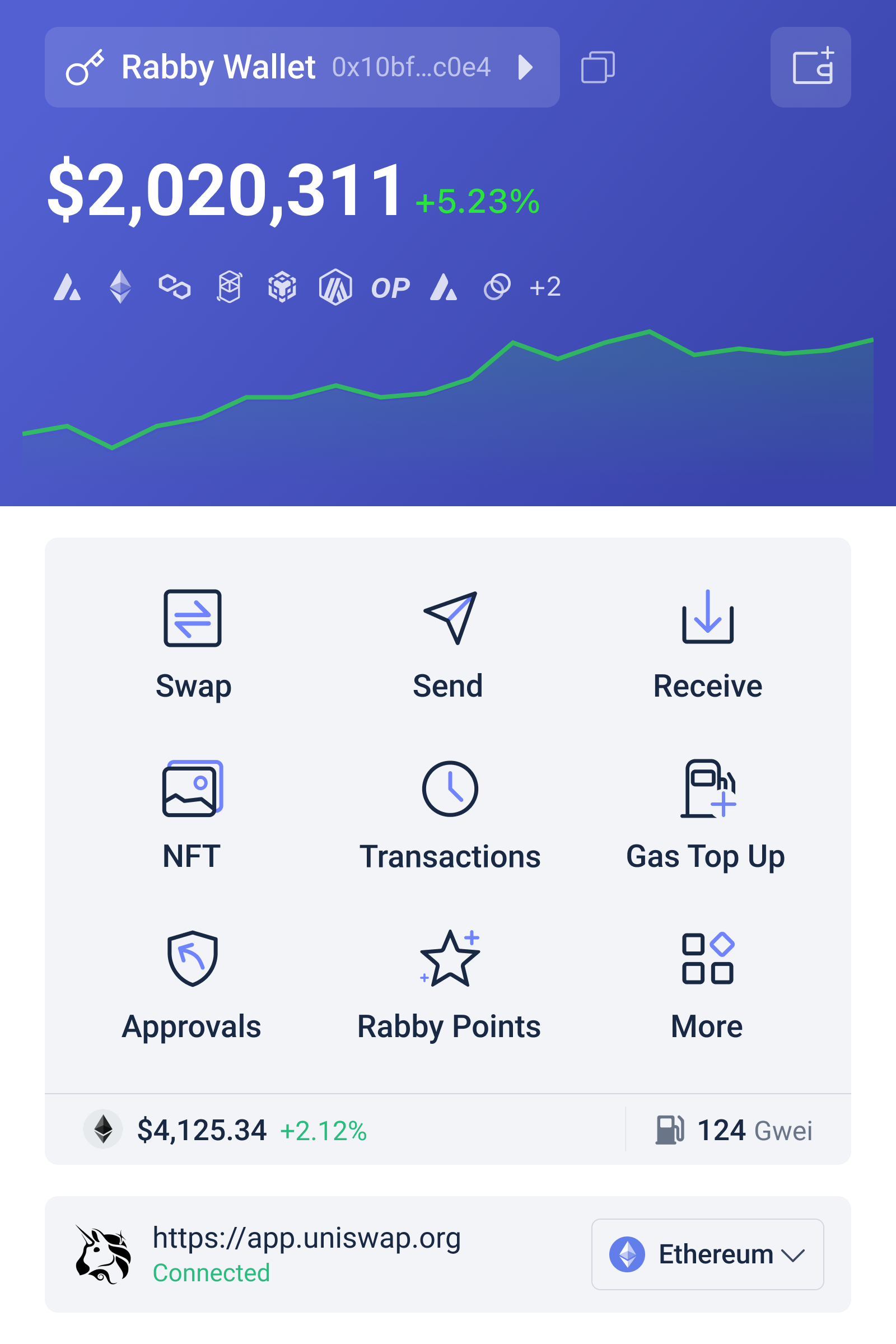
A capable wallet acts as a security layer between the user and a fragmented application environment. It can identify the network, display contract and asset information, simulate calls, flag suspicious patterns, and make signing details easier to compare with the user’s intention. For people who work across Ethereum and other EVM chains, that context is especially important: the same address can exist across networks, while the contracts, balances, bridges, and risks differ materially.
Tools such as rabby wallet are most useful when treated as decision-support systems rather than as substitutes for judgment. A warning about an unlimited approval, an unfamiliar spender, a changed balance, or an unexpected network can interrupt an otherwise automatic habit. That interruption has practical value. Security often depends less on detecting every possible attack than on making high-consequence mistakes harder to complete quickly.
There is also a custody boundary that software cannot erase. A non-custodial wallet can help the user inspect and sign transactions, but it cannot recover a seed phrase exposed through phishing, reverse a confirmed transfer, or make a compromised device trustworthy. Hardware wallets, isolated signing environments, strong browser hygiene, and carefully managed backups remain relevant. A polished transaction review is only one control in a larger system.
A reusable framework for reviewing DeFi transactions
Before signing, ask four questions. First: What leaves my wallet? Include gas, tokens, NFTs, and assets transferred through contract logic. Second: What permission am I granting? Distinguish a one-time transfer from an approval that may be used later. Third: What do I receive, and what is the worst plausible result? A quoted output is not the same as guaranteed economic value. Fourth: Who controls the relevant contracts and interfaces? A familiar brand does not eliminate upgrade keys, admin powers, oracle dependencies, or governance risk.
Simulation strengthens this framework by converting technical execution into observable changes. If the wallet reports that a swap sends one asset and receives another, compare that with the application’s stated purpose. If it reports an approval, ask why the approval is needed and whether the allowance can be limited. If it reports an unexpected contract call, stop rather than assuming the warning is merely technical noise.
One practical rule is to separate low-value experimentation from high-value operations. A new protocol can be tested with a small amount, a limited approval, and a wallet that does not hold long-term savings. This does not make the protocol safe; it limits the impact of being wrong. In risk management terms, the user is reducing exposure while gathering information.
Important limitations and failure modes
Simulation can fail outright when a transaction depends on state that changes rapidly, private order flow, timing-sensitive conditions, or external services. It can also produce a technically correct result that is economically misleading. A transaction may succeed while suffering severe slippage, interacting with a manipulated market, or locking assets under unfavorable terms. Success is an execution property, not a profitability judgment.
There is a second limitation: users may experience warning fatigue. If every unfamiliar contract generates a long list of alerts, people can learn to dismiss them. Good security design therefore needs prioritization. An unexpected network, an unlimited allowance, a large balance decrease, or a destination that differs from the user’s intent deserves more attention than a minor informational notice. The quality of a wallet depends not only on how many risks it detects, but on whether it helps the user distinguish urgent risks from routine complexity.
Finally, simulations operate within assumptions. If the chain reorganizes, a contract changes state, liquidity moves, or a malicious interface presents a different request than the one reviewed, the preview may no longer describe the final event. The appropriate response is not distrust of every simulation. It is calibrated confidence: use the preview as evidence, then verify the material details immediately before signing.
What to watch as wallet security develops
The most promising direction is a move from transaction display toward transaction reasoning: clearer explanations of permissions, more useful comparisons between application intent and contract effect, and better support for cross-chain context. If these systems become more accurate without becoming more distracting, they could make security practice more accessible to ordinary users while preserving control for advanced traders.
The unresolved challenge is interpretation. No interface can decide whether a risky trade is worthwhile, whether a protocol’s governance is credible, or whether a yield compensates for smart-contract and liquidation risk. Those are financial and operational judgments. The wallet can expose the mechanism; the user must still evaluate the incentives.
Frequently asked questions
Does a successful transaction simulation mean a DeFi transaction is safe?
No. It means the transaction was modeled successfully under particular conditions. It may still involve excessive permissions, economic loss, a malicious protocol, changing market conditions, or risks outside the simulated call.
Why are token approvals such an important security concern?
An approval can authorize a contract to spend tokens later. The approval transaction may not move funds immediately, but a compromised or malicious spender could use the permission afterward. Review the spender, allowance size, and purpose before signing.
Should advanced DeFi users still use a separate wallet for experiments?
Often, yes. Separating long-term holdings from experimental activity limits the damage if a site, contract, device, or approval is compromised. It adds operational complexity, so the setup should be simple enough to maintain consistently.
The central lesson is modest but powerful: transaction simulation is not a green light; it is a better dashboard. Used alongside limited exposure, approval discipline, device security, and independent verification, it can turn an opaque signing moment into an informed decision. In DeFi, that reduction in uncertainty may be one of the most practical security improvements available—provided users remember what the tool can see, and what it cannot.